
The Securities and Exchange Board of India (Sebi) on Monday approved the introduction of a new asset class, designed to offer greater flexibility to fund managers and target investors with a higher risk appetite. The markets regulator also cleared the liberalised Mutual Funds Lite (MF Lite) framework, aimed at fund houses that solely launch passively managed schemes. In another significant move, the board reduced the timeframe for rights issues from the current 317 working days to just 23.

The Reserve Bank of India (RBI) on Monday directed banks and non-banking financial companies (NBFCs) offering gold loans to thoroughly review their policies, processes, and practices to identify any gaps. The central bank also told them to closely monitoring their gold loan portfolios amid significant growth observed in this segment vis--vis some lenders. Additionally, the RBI, through a circular, instructed these lenders to ensure adequate controls over outsourced activities and third-party service providers.

'So, we would work with our members to ensure that we as an SRO create some sort of due diligence for fintechs.'

Allocation to bank deposits -- fixed deposits, savings account deposits, and current account deposits -- came down.

Balance-level delinquencies in the credit card segment saw a 17 basis points (bps) year-on-year (Y-o-Y) rise in the quarter ending June 2024 (Q1FY25). In all other credit segments, including personal loans, delinquencies declined even as retail credit growth moderated, consequent to banks tightening the supply of credit to the unsecured segments, a report by TransUnion CIBIL said on Monday. Data shows that balance-level delinquencies, measured in terms of 90 days or more past due, in the credit card segment stood at 1.8 per cent in Q1FY25- highest among all other credit segments.

Bajaj Housing Finance Ltd's impressive stock market debut has brought cheer to the 100-year-old Bajaj Group, but the conglomerate faces the prospect of Bajaj Finserv being removed from the benchmark Sensex index. According to market expectations, Trent, a Tata group-owned fashion retailer, is likely to replace Bajaj Finserv during the upcoming index rebalancing in December.

State-owned Life Insurance Corporation (LIC) announced on Monday that it had signed up tech giant Infosys to develop a next-generation digital platform that will act as the foundation for new high-value business applications, such as customer and sales super apps, portals, and digital branches. The financial terms of the deal remain undisclosed. The tie-up with Infosys is part of LIC's "long-drawn" strategy, said a senior executive of India's biggest insurer, who noted that the IT giant "won the bid to develop the next-generation platform through a request for proposal (RFP) process".

Industry experts believe that health insurance companies are unlikely to experience business cannibalisation due to the central government's decision to extend health coverage to people aged 70 and above, regardless of their income level, under the Ayushman Bharat scheme. On Wednesday, the Union Cabinet expanded the Ayushman Bharat Pradhan Mantri Jan Arogya Yojana (AB-PMJAY) to include all senior citizens aged 70 and older. This move is expected to benefit nearly 45 million families, comprising 60 million senior citizens, by providing Rs 5 lakh in free health insurance coverage per family.

'Opportunity is there in each segment of the market. There is opportunity in affordable and specifically governed by government initiatives as well as for housing for all.'
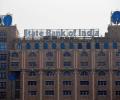
In order to boost its deposit base, State Bank of India (SBI) is focusing on various segments, including JanDhan account holders, trusts, societies, and the segment below the affluent class but above the normal account holders. According to Ashwini Tewari , managing director, SBI, the bank is focusing on three broad segments. One is wealth banking, where the bank is focusing on individuals who perhaps do not qualify for private banking but are above regular accounts and require individual attention.

During the first eight months of CY24, 50 IPOs mobilised Rs 53,453 crore.

Eying benefits from digital banking, lenders are now looking at building Unified Recovery Interface (URI) for enhancing efficiency, reducing costs, and getting good prices for properties of defaulters. This would be managed by PSB Alliance Ltd, a company set up by all public sector banks in the country. M V Rao, chairman, Indian Banks' Association (IBA), said: "Till now we had Unified Payments Interface (UPI), a product developed by National Payments Corporation Ltd (NPCI).

'We do not believe in fire sale. We don't do it.'

The greater the post-listing gains, the higher the number of investors looking to sell.

'There has been a change in the advances mix, with the share of corporate loans decreasing.'
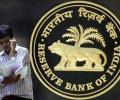
The Reserve Bank of India (RBI) has recognised the Fintech Association for Consumer Empowerment (FACE) as a self-regulatory organisation (SRO) in the fintech sector, the central bank announced on Wednesday. The banking regulator received three applications for fintech SRO. Of the remaining two applications, one has been returned by the RBI with a provision for resubmission after meeting specific requirements, while the third application is still under examination, said Governor Shaktikanta Das at the Global Fintech Fest in Mumbai.

The Reserve Bank of India (RBI) will launch the Unified Lending Interface (ULI) nationwide in due course, aiming to transform India's lending sector, similar to how the Unified Payments Interface (UPI) revolutionised the payments ecosystem, Governor Shaktikanta Das said on Monday.

'In the case of corporate credit, especially to AAA borrowers, lenders will have to take a fresh look at pricing.'

Overseas Indians deposited around $4 billion in non-resident Indian (NRI) deposit schemes in April - June FY25, up 79 per cent over the amount deposited in these schemes in the same period last year, data released by the Reserve Bank of India (RBI) on Monday showed. In April - June FY25, inflows into the NRI schemes stood at $3.95 billion, compared to $2.21 billion during the same period a year ago. With this, the total outstanding NRI deposits as of June stood at $155.71 billion.

The Indian equity markets will soon account for over a fifth of a key emerging market (EM) benchmark tracked by funds with assets exceeding $500 billion. This development is expected to funnel as much as $3 billion into the domestic markets. Following the latest review undertaken by global index provider MSCI, India's weighting in the MSCI EM index will surpass 20 per cent for the first time, narrowing its gap with the current top-weighted China to fewer than 400 basis points.
 © 2026 Rediff.com - Advertise with us - Disclaimer - Privacy Policy - Sitemap - Feedback - About us - Terms of use - Grievances